


A heat pump operates based on fundamental thermodynamic principles. It is a system that transfers energy from a low-temperature source (air, water, or ground) to a higher-temperature environment using the phase change of a refrigerant and compressor power. It is not an energy producer but an energy carrier.
Technical Efficiency and the COP Value
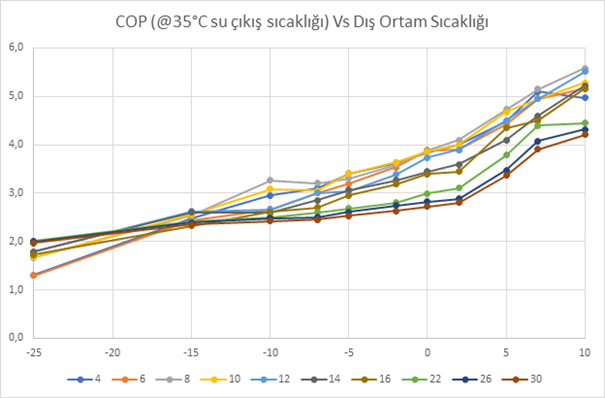
From an engineering perspective, the heart of a heat pump is the COP (Coefficient of Performance) value. COP is the ratio of the thermal energy produced by the system to the electrical energy it consumes.
• Ideal Value: In modern systems, an average annual COP is expected to be between 3.5 and 4.5. This means that 1 kW of electricity can yield approximately 4 kW of thermal energy.
• Electrical Consumption: As the outdoor temperature drops, the COP decreases, which subsequently increases electrical consumption.
Heat Pumps vs. Combi Boilers
Natural gas boilers convert chemical energy into thermal energy, and their efficiency cannot exceed 100% (or 109% based on lower heating value). In contrast, heat pumps utilize a thermodynamic cycle to provide effective efficiencies in the 300% to 500% range. Reducing dependency on fossil fuels and lowering carbon footprints makes heat pumps the technology of the future.
Optimizing Heat Dissipation in Heat Pump Systems
Maximizing the seasonal Coefficient of Performance (SCOP) depends directly on the performance of terminal units in low-temperature regimes. Engineering approaches for underfloor heating and panel radiators are as follows:
1. Underfloor Heating: The Ideal Thermodynamic Match
Underfloor heating is the system that offers the highest efficiency for heat pump technology.
• Maximum COP: Since it operates with supply water at 35–40°C, the compressor load is reduced, and the lower temperature differential allows the system to approach Carnot efficiency.
• Thermal Inertia and Stability: The screed layer acts as a large thermal mass, increasing system stability and reducing the risk of "short-cycling."
• Low Temperature Differential: Spreading heat transfer across the entire floor surface provides homogenous comfort even with low-temperature water.
2. Capacity Conversion in Panel Radiators (Type 22 vs. Type 33)
When transitioning from a standard 70/55°C regime to the low-temperature regime of a heat pump, the capacity of a radiator of the same size drops significantly. The most practical way to compensate for this loss is to use Type 33 radiators.
3. Engineering Solutions and Application
• Surface Area and Thermal Power: In a 45/35°C regime, Type 22 radiator capacity drops to about 30%. Utilizing Type 33 increases the surface area, providing sufficient heating without overstraining the system.
• Fan-Assisted Systems: By using micro-fans to increase the convection coefficient, low-temperature performance can be doubled.
• Hydraulic Balance: In hybrid systems where underfloor heating and radiators are used together, pipe diameters and circulation pumps must be recalculated due to increased flow rate requirements.
Feasibility and ROI in Regional Conditions
Regions like the Aegean, Mediterranean, and Marmara in Türkiye have climate conditions highly suitable for heat pump applications.
• Capacity Calculation: For a moderately insulated house, a heating power of approximately 1 kW per 10 m2 is anticipated. A 12–16 kW heat pump is generally sufficient for a 150 m2 residence.
• Return on Investment (ROI): Although the initial investment cost is higher, the savings in operating expenses allow the investment to pay for itself within 5 to 8 years.
Conclusion
A heat pump is not just a device; it is a holistic engineering system that requires precise project planning. A correctly designed heat pump system is one of the most logical HVAC solutions of our time in terms of comfort and sustainability.
You can explore Copa heat pump models here.